
The Daywalker
Straddling Two Worlds and Finding the Value In Between

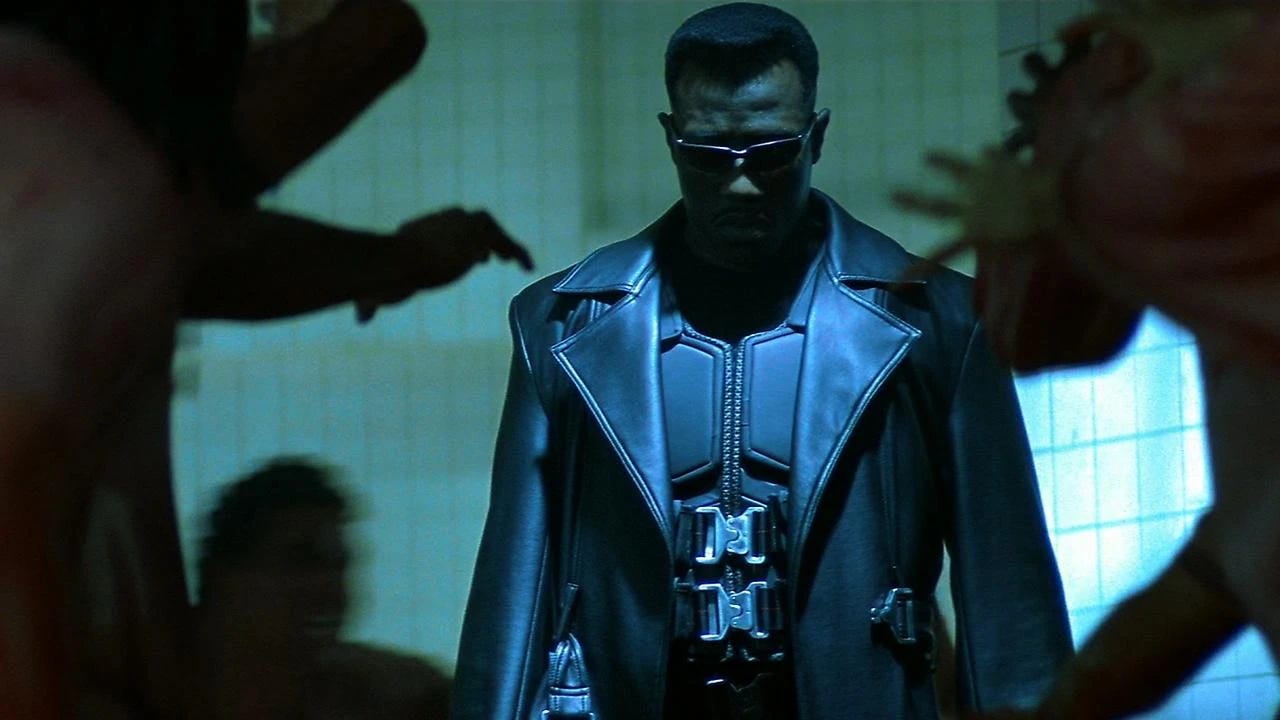
“My name is Blade. I was born half-human, half-vampire. They called me the Daywalker.”
In a recent meeting, a senior civilian leader bestowed upon me a lesson buried deep within the 1998 action movie, Blade.
“You’re a daywalker,” the leader observed. “You live in both worlds, relegated by both, and I’m not sure anyone fully realizes the value you bring by having a foot in each world.”
I realized immediately what they were getting at.
I am a military officer with a high level of academic credentialing, and in the eyes of each side, I am “not one of them.”
On the military side, I was now an academic, a nerd—someone who had seemingly abandoned the path of command and tactical operations for the ivory tower of higher learning. As former Marine-turned-scholar Mike Hunzeker identifies in his own work, the career implications for pursuing higher education in the military are often not positive.
While militaries value the benefit of sending service members to universities—evinced by the education opportunities provided throughout a career—there seems to be an unstated, invisible threshold for how long such a pursuit should last: the single calendar year. This is best reflected in the length of standard professional military education programs.
Any program that exceeds this unspoken boundary seems to generate subtle (or not-so-subtle) disdain. I heard it often over the past few years regarding my own program:
“Must be nice to take a 3-year vacation.”
“While you were at school, some of us were actually working.”
These statements make clear: being an “academic” while on active duty is not a good thing.
On the opposing end of the spectrum, I was a military officer in the world of academia, and I would never be accepted as a “true” academic. While my experience was largely positive, it wasn’t without encounters with faculty who categorized me as less capable.
Due to the structure of military-sponsored programs, which often allocate 36 months to complete all academic requirements, a frequent comment from faculty was, “It took me four years to complete my program.”
This was the most common refrain, and the real sting wasn’t in what was said, but what wasn’t. There is a second, implied half to that statement: If it took me four years, it will take you at least four years, if not longer.
I’m not arguing the validity of that claim, but once again, I found myself in a world I would never be fully accepted into. I would never climb the educational hierarchy, obtain tenure, or be viewed as producing anything truly meaningful to the research world.
So, where does that leave someone like me?
As the senior civilian leader suggested, somewhere in between—existing, but never truly belonging, to the worlds I am now required to operate in. A man without a home.
However, as that leader also saw, there is value in this state of being:
As a uniformed service member, you know the lingo, the customs, and the courtesies. You can translate dense academic research into digestible recommendations that shape senior leader decisions.
As an academic, you can translate research goals and objectives to the academic world, untangling the military vernacular of acronyms and slang to help achieve broader military objectives through sound research.
This is the sweet spot, echoing what International Relations scholars have long sought: research that genuinely seeks to solve real-world problems.
While I’m not necessarily one for labels, the daywalker moniker seems to fit quite well.
A+ for subject. Extra points for '90s Blade reference...Organizations need 'daywalkers' to bridge networks and allow information to move constructively between them. That allows the seams and gaps to be exploited, assimilation / innovation to occur, and value to be created.